


Your new hire starts Monday. You’ve sent them the handbook, added them to Slack, and scheduled their first week of meetings. And now you’re realizing: you actually don’t know anything about them! A new employee questionnaire changes this.
It’s not another HR form. It’s a signal that you care about who they are, not just what they do. It’s a tool for accelerating integration, building psychological safety, and creating the foundation for real connection. When should onboarding surveys be sent? Are onboarding surveys important for employee retention?
The best part? When done right, onboarding questionnaires work asynchronously, with tools like Geekbot and Slack. Your new hire can answer from home, in their own time, at their own pace. No awkward introductions. Just genuine information that helps both the person and the team.
This guide gives you more than 85 questions you can use throughout your onboarding process and the strategy to make them actually useful.
What Is a New Employee Questionnaire?
A new employee questionnaire is a survey designed to help you get to know a new hire beyond their resume. It’s different from onboarding paperwork (W-4s, emergency contacts, etc.). Instead, it’s focused on:
- Personal preferences (how they like to work, when they’re most productive)
- Communication style (Slack vs. email, sync vs. async)
- Work habits (solo vs. collaborative, planned vs. spontaneous)
- Values and motivations (what matters to them, what drives engagement)
- Team fit (interests, hobbies, personality)
- Onboarding experience (what’s working, what’s confusing, where they need help)
Done well, a questionnaire serves multiple purposes: it helps managers onboard more effectively, it helps the new hire feel welcomed, and it gives the team context for integration.
Why Employee Onboarding Surveys Matter
Sometimes, onboarding is underrated. Most companies put huge resources into hiring, but almost no thought into what happens after the offer is accepted. Therefore, asking the right questions can make a huge difference
Employee Retention Starts Day One
The first 90 days predict whether someone will stay for a long period of time. People who feel connected and supported early are significantly more likely to stay. Conversely, people who feel isolated or lost in their first month are already thinking about their choice. A thoughtful questionnaire signals investment in their success.
Reduces Isolation, Especially for Remote Teams
Remote onboarding can be a tedious task. Your new hire sits at home, alone, trying to figure out how things work while everyone else is distributed. Without intentional connection rituals, they can go weeks feeling like an outsider. A new employee questionnaire creates touchpoints, and they give managers and teammates context for reaching out, creating coffee chats, and building relationships asynchronously.
Accelerates Integration and Productivity
When you understand someone’s working style up front, you can integrate them faster. You know whether to put them on direct projects or have them shadow, if they prefer detailed instruction or big-picture context. You know which team members they should meet with. A suitable questionnaire cuts weeks off the integration timeline.
Creates Psychological Safety
New hires might feel vulnerable. They’re trying to prove themselves, and they are worried about judgment. A new employee questionnaire that asks “how do you like to work?” signals that you care about their preferences, not just squeezing them into your existing system. This builds psychological safety, the foundation of engagement.
Improves Manager Effectiveness
Managers often feel lost during onboarding. They want to support the new hire but don’t know their learning style, communication preference, or what would actually help. A questionnaire gives managers the information they need to be genuinely supportive instead of just going through the motions.
Async Surveys = Better Participation
Forced “get to know you” meetings feel awkward. New employee survey questions let people think through their answers. They work across time zones. They’re less intimidating, and you will get more honest, thoughtful responses and higher participation rates.
When to Send New Hire Questionnaire
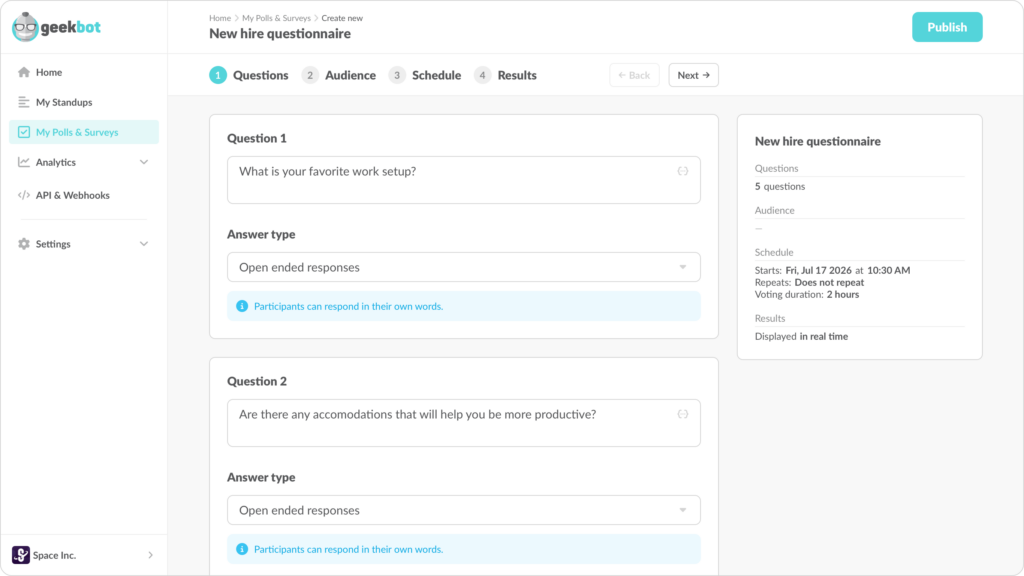
Timing matters, and different questionnaires serve different purposes throughout the onboarding journey.
Send a simple, fun new employee questionnaire with your accepted offer (preboarding). This gets them excited about starting, gives you context before they arrive, and signals that your company is human and thoughtful. Keep it short with 5-10 questions. Think: “What should we stock in the kitchen?” “What’s your favorite work setup?” “Anything we should know about you?”
On their first day, send a brief welcome questionnaire via Slack, with casual and fun questions like “Coffee or tea?”, “Early bird or night owl?” Around days 3-5, send a more comprehensive questionnaire. By now, they’ve had an orientation and understand the basics, but they’re still in absorb mode. Ask about communication preferences, work style, and what questions they have. This is your first real get-to-know-you moment.
The critical check-in comes around day 25-30. Send a survey asking how onboarding went, what’s been confusing, whether they feel supported, and if there are blockers. This isn’t about getting to know them; it’s about diagnosing onboarding gaps and showing you actually care about their experience. Finally, at the end of the probation period (90 days), send a longer retrospective asking how they feel about the team, the role, and the culture. This gives you a chance to address issues before they become retention problems.
Best Practices for New Employee Questionnaire
- Keep Surveys Short: More than 10 questions feels like a burden. Aim for 5-8 questions per survey. Respect people’s time.
- Mix Fun and Practical: Don’t make the entire survey corporate and stiff. Ask “What’s your favorite work snack?” alongside “What communication style works best for you?” The mix makes it feel human.
- Avoid Overly Personal Questions: You want to get to know them, but you’re not their therapist. Skip questions about family trauma, relationship status, or deeply personal values. Stick to work preferences and personality.
- Make Participation Optional: Frame it as “would love to know more about you,” not “please complete this survey.” In Slack, it feels even lighter. People will participate more freely when they feel like they can.
- Use Async Formats: Slack, email, or Google Forms, anything that lets people answer on their own time. Avoid synchronous surveys that require a meeting or call.
- Avoid overly corporate HR Tone: Don’t sound like another HR person. “Please provide your preferred communication modality.” Try: “How do you like to communicate?” Modern teams respond to human language.
- Actually, use the Information: This is the most important part. If you ask “what helps you feel supported,” then ignore the answer; you’ve just told them their input doesn’t matter. Read responses. Act on them. Reference them in conversations. If someone says they need clearer instructions, give them clearer instructions.
Get to Know You Questions for New Employees
These are your foundational questions for a new employee questionnaire. The ones that will help everyone understand the person as a human, not just an employee.
- What’s your name, and how do you prefer to pronounce it?
- Where are you from originally?
- What’s your background before this role?
- What drew you to this company?
- What excites you most about this role?
- Morning person or night owl?
- Coffee or tea (or neither)?
- What’s your favorite work snack?
- How do you like to spend your free time?
- What’s a skill you’re really proud of?
- What’s something you want to learn this year?
- Favorite book, podcast, or show?
- Beach or mountains?
- City or countryside?
- What’s your guilty pleasure?
- Any interesting hobbies?
- What’s your superpower?
- What do you geek out about?
- Favorite productivity tool or app?
- What’s your dream vacation destination?
Fun New Hire Questionnaire Questions
A set of more playful questions will help the team bond and get a sense of the new member’s personality.
- Would you survive one week without Slack?
- Most-used emoji?
- Keyboard clicks or a silent keyboard?
- Mechanical keyboard or laptop keyboard?
- Dark mode or light mode (for literally everything)?
- Coffee shop or home office?
- Playlist while working or silence?
- Dogs or cats?
- Introvert or extrovert (or ambivert)?
- Would you rather: always be hot or always be cold?
- Favorite work snack?
- Cereal or oatmeal?
- Pancakes or waffles?
- Pineapple on pizza or definitely not?
- Tabs or spaces?
- Mac, Windows, or Linux?
- Vim or VS Code?
- Terminal or GUI?
- Debugging code or writing new features?
- Standing desk or sitting desk?
Professional New Employee Survey Questions
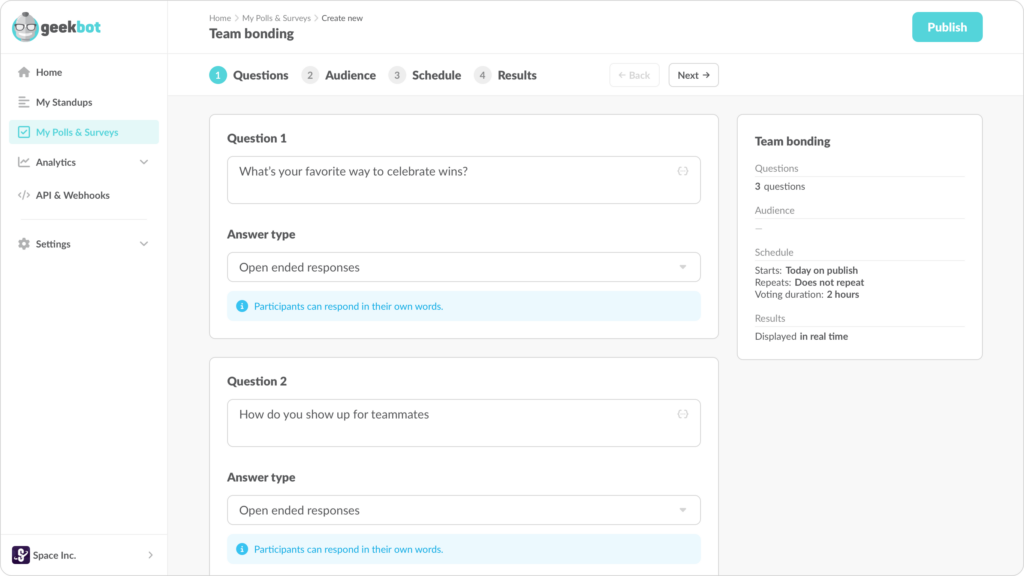
If you are looking for more structured questions, the examples below are useful for managers and HR teams to optimize onboarding and support.
- What does success look like in your first 30 days?
- What helps you feel supported at work?
- How do you prefer to receive feedback?
- What communication style works best for you?
- When do you do your best work?
- Do you prefer detailed instructions or big-picture context?
- What makes a great manager in your opinion?
- How do you like to collaborate with teammates?
- What’s your preferred meeting format (sync vs. async)?
- Are there any accommodations that would help you be more productive?
- What’s one thing your previous manager did really well?
- What’s something you want your new manager to know?
- How do you handle stress or high-pressure situations?
- What’s your learning style?
- Do you prefer working solo or in groups?
- What motivates you most in a role?
- What kind of work energizes you?
- What kind of work drains you?
- What are your career goals?
- What would make you feel like you made the right choice joining us?
Remote Team Onboarding Questions
These questions are specifically designed for distributed and hybrid teams. They acknowledge the unique challenges of remote onboarding and help managers support people effectively.
- What time zone are you in?
- What are your core hours?
- Do you prefer the camera on or off during meetings?
- What’s your favorite async communication tool?
- How do you feel about video calls?
- Do you prefer written feedback or verbal?
- What’s your ideal meeting length?
- How much real-time overlap do you need with the team?
- Do you have a dedicated home office?
- Any internet stability issues we should know about?
- What’s your preferred break schedule?
- How do you stay connected to teammates remotely?
- Do you prefer scheduled 1-on-1s or more spontaneous?
- What’s been your best remote work experience?
- What’s been your biggest remote work challenge?
- How do you separate work and personal time?
- What’s your favorite remote work ritual?
- Slack notifications on or off?
- Do you want status updates visible in your calendar?
- What would make remote onboarding feel more personal?
Team Bonding Questions for New Hires
These help the new person connect with teammates and give the team insight into who the new person is beyond their job description.
- What’s something about you that might surprise people?
- What’s your favorite way to celebrate wins?
- What kind of team environment do you thrive in?
- Do you prefer working with the same people or variety?
- What’s your favorite team activity?
- Would you rather attend a virtual happy hour or skip it?
- What’s a question you’d love your teammates to ask you?
- What’s something you’d like your teammates to know?
- What’s your personality type (Myers-Briggs, Enneagram, etc.)?
- Are you more of a rule-follower or a rule-breaker?
- What would your coworkers say is your best trait?
- What’s your definition of team success?
- How do you show up for teammates?
- What’s your biggest pet peeve in team dynamics?
- How do you handle conflict?
- What makes a great colleague?
- Do you prefer big group hangouts or smaller groups?
- What team tradition would you want to start?
- What’s something you learned from a previous team?
- What’s one way we can support you better?
30-Day Employee Check-In Questions
This is one of the most important sections. Most companies skip this, but it’s critical. A 30-day check-in catches onboarding problems before they become retention problems.
How are you feeling overall?
- Do you feel like you made the right choice joining us?
- On a scale of 1-10, how are you settling in?
- What’s been the best part of your first month?
What’s Working?
- What has helped you feel supported?
- Who on the team has made you feel welcome?
- What’s gone better than expected?
What’s Confusing?
- What has been the most confusing so far?
- Are there processes or systems that are unclear?
- What didn’t we explain well during onboarding?
- What wish you had known before starting?
Connection & Integration
- Have you gotten to know your teammates?
- Do you feel connected to the team?
- Are there people you haven’t met yet who you’d like to?
- Do you feel part of the team yet, or still on the outside?
Support & Resources
- Do you have what you need to succeed?
- Are there tools or resources you’re missing?
- Is anything slowing you down?
- Do you feel supported by your manager?
The Role
- Are the expectations clear?
- Does the role match what you expected?
- Is the workload manageable?
- Do you understand success in this role?
Culture Fit
- Do you feel like you fit the team culture?
- Is there anything surprising about how we work?
- Anything that feels misaligned from what you expected?
The Feedback Loop
- Have you gotten helpful feedback?
- Do you know how your manager views your progress?
- What would help you succeed more?
Looking Ahead
- What are you excited about for month two?
- Is there anything we should address now?
- Any blockers we can help remove?
Slack-Friendly Onboarding Questions
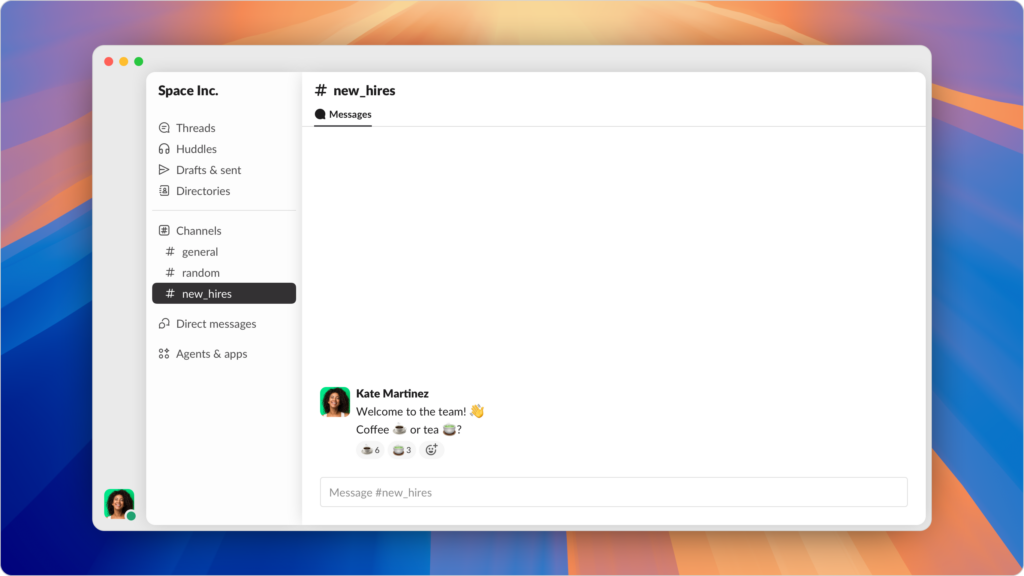
This new employee questionnaire is formatted specifically for Slack, short, emoji-friendly, and designed for quick reactions and minimal friction.
Day 1 Welcome:
Welcome to the team ! Quick intro question:
Coffee ☕ or tea 🍵?
Day 2 Vibe Check:
Are you a morning person or a night owl?
React with: ☀️ = Morning 🌙 = Night
Day 3 Work Style:
How do you like to work?
Solo deep focus 🧠 OR Collaborative sessions 👥
Day 4 Communication:
Communication style check :
Slack all day 💬 OR Scheduled meetings 📅
Day 5 Fun Question:
Quick one:
Pineapple on pizza 🍍 OR Absolutely not 🚫
First Week Wrap-Up:
How’s your first week feeling?
🔥 = Crushing it 😌 = Settling in 🤔 = Still getting oriented
Second Week Check-In:
What’s one thing we could explain better? 🤔
Third Week Connection:
Who on the team should this person definitely meet with? 👋
Questions Managers Should Avoid Asking
Knowing what not to ask shows you understand professional boundaries. Here’s what to avoid while buliding a new employee questionnaire:
Personal & Family Topics. ❌ “Are you married?” “Do you have kids?” “Tell us about your significant other?” These create legal risk and aren’t relevant to job performance. You’re hiring them, not their family.
Health & Medical Information. ❌ “Do you have any disabilities or health conditions?” “Are you on medication?” This is protected information. You can ask, “Do you need accommodations to do your job?” But never ask about the condition itself.
Politics & Religion. ❌ “What are your political beliefs?” “What’s your religion?” These are irrelevant to work and create unnecessary division. Even casual questions (“Who did you vote for?”) cross professional lines.
Protected Characteristics. ❌ “How old are you?” “Where are you really from?” (coded for race/ethnicity). Anything that assumes immigration status, citizenship, or categorizes based on appearance can expose you to discrimination claims.
Forced Vulnerability. ❌ “What’s your biggest failure?” “Tell us something you’re ashamed of?” Psychological safety isn’t built on day one by forcing vulnerability. That’s a therapist’s job, not an onboarding survey’s.
Forced Fun Questions. ❌ “If you were a vegetable, what would you be?” “What’s your spirit animal?” These feel corporate and cringey. Modern teams skip the whimsy.
Assumptions About Experience. ❌ “You’ve probably worked in Agile before, right?” Don’t assume. Ask directly: “Have you used X?” Let them tell you what they know.
Gossip or Judgment. ❌ “Why did you really leave your last job?” “Why aren’t you at [prestigious company]?” Ask instead: “What did you learn from previous roles?” Focus on who they are now, not their past drama.
Future Commitments. ❌ “Will you stay 2+ years?” “Can you work weekends?” Don’t ask for promises about unknowns. Those conversations happen after they understand the role.
How to Automate Employee Onboarding Surveys
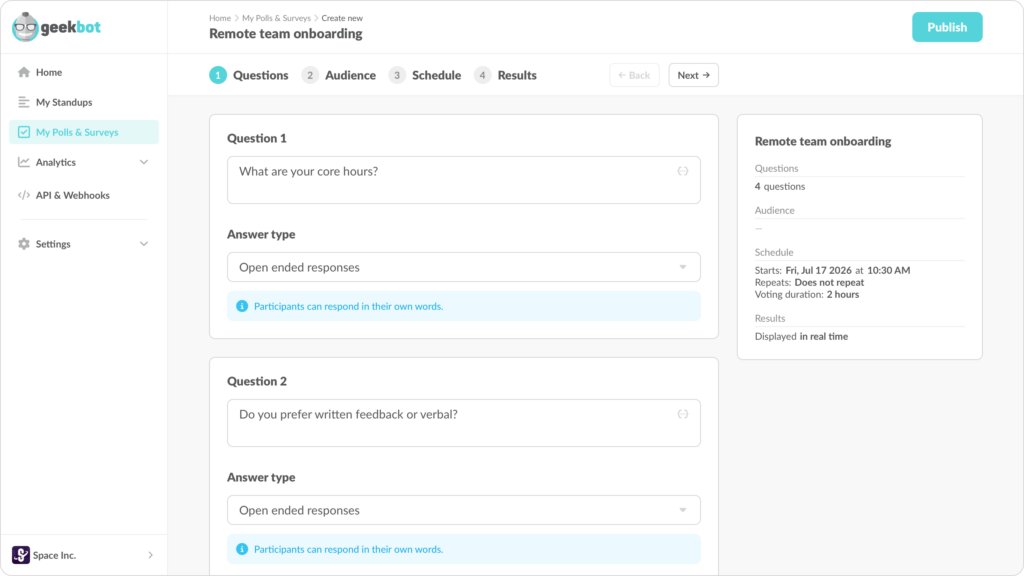
The magic of a new employee questionnaire is that it can be automated and sent at the right time in the onboarding journey, without requiring manual effort. Tools like Geekbot make this process feel seamless.
Set Up Preboarding Workflows
When someone accepts an offer, automatically send them a brief welcome questionnaire via email or Slack. Make it feel personal and exciting, not formal. This primes them and gives you information before they even start.
Integrate with Your Onboarding Timeline
Use your onboarding tool to send questionnaires at key moments:
- Day 1: Fun welcome questions
- Day 3: Get-to-know-you survey
- Day 7: First week reflection
- Day 30: Comprehensive check-in
- Day 90: Retrospective
Slack-Based Workflows
If your team lives in Slack, you can send new employee questionnaire directly there. This is frictionless; people answer right where they work. Geekbot integrates with Slack, so you can build your entire onboarding questionnaire sequence without switching platforms.
Manager Prompts
Automate reminders to managers based on questionnaire responses. If someone says “I’m confused about process X,” send the manager a reminder to clarify that. This turns survey data into actual action.
Create Onboarding Sequences
Build a sequence of async onboarding content paired with reflection questions. Video walkthrough, then a question. Team introduction, then a question. This creates engagement without meetings.
Track Onboarding Metrics
Aggregate questionnaire responses over time. Are new hires feeling supported? What’s the most confusing part? Use this data to continuously improve your onboarding.
Connect Responses to Action Items
Don’t just collect responses, act on them. If three new hires said, “Nobody explained our naming conventions,” fix your documentation. If someone said they didn’t know who to reach out to, improve your org intro process.

Frequently asked questions
What should a new employee questionnaire include?
A good new employee questionnaire should include questions across several categories: getting-to-know-you (preferences, personality, background), work style (async vs. sync, feedback style, communication preferences), team fit (interests, collaboration style), and any role-specific needs. Keep it to 8-12 questions max. Mix fun questions with practical ones.
What are good onboarding survey questions?
Good onboarding questions are specific, non-invasive, and actionable. Instead of "Are you happy?" ask "What's been most confusing?" Instead of "Tell us about yourself," ask "What was your favorite part of your previous role?" Instead of open-ended vulnerability questions, ask "How do you prefer to receive feedback?" The best questions reveal information that helps managers and teammates support the new person better.
When should onboarding surveys be sent?
When should onboarding surveys be sent?
Send questionnaires at multiple touchpoints: preboarding (before day one), day one (welcome), first week (deeper get-to-know-you), and day 30 (check-in). Some teams also do 90-day retrospectives. Space them out so they don't feel overwhelming.
How long should an employee questionnaire be?
Keep it short. Aim for 5-10 questions per survey. Anything longer than that feels burdensome. Most surveys should take 3-5 minutes to complete. If you need more information, send multiple shorter surveys at different times rather than one long survey.
What are fun questions to ask new employees?
Fun questions should be lighthearted and reveal personality: "Coffee or tea?" "Dogs or cats?" "What's your most-used emoji?" "Pineapple on pizza or definitely not?" "Dark mode or light mode?" "Mechanical keyboard or laptop keyboard?" These feel casual but still give you insight into who the person is.
How do remote teams onboard employees effectively?
Remote onboarding requires intentionality. Use async questionnaires instead of forced meetings. Create Slack-based introductions. Schedule async video walkthroughs. Have 1-on-1s across time zones. Use questionnaires at multiple touchpoints so the new hire has a voice throughout onboarding.
Are onboarding surveys important for employee retention?
Yes. Retention is decided in the first 90 days. Employees who feel welcomed, supported, and connected to their team are significantly more likely to stay. Surveys are a tool for creating that connection, but only if you actually listen to responses and act on them.